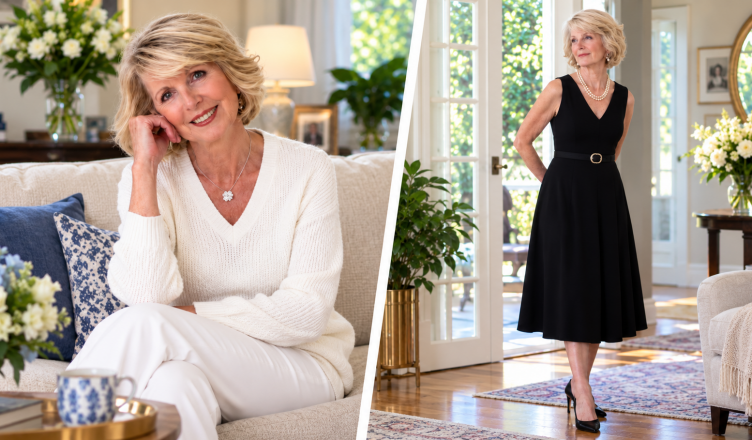
At 75, a woman can be expected to have accumulated decades of experience, memories, preferences and a strong understanding of who she is. Yet something as ordinary as choosing an outfit can still invite judgment. A skirt that seems too short, a dress considered too fitted, a bright color, high heels or an unconventional combination may suddenly become the subject of criticism—not because the clothes themselves have changed, but because of the age of the person wearing them.
That is the situation facing a 75-year-old woman whose clothing choices have attracted negative comments. Some observers believe that what she wears is no longer “appropriate” for someone her age. Her position, however, is straightforward: “I have the right to choose how I want to dress.”
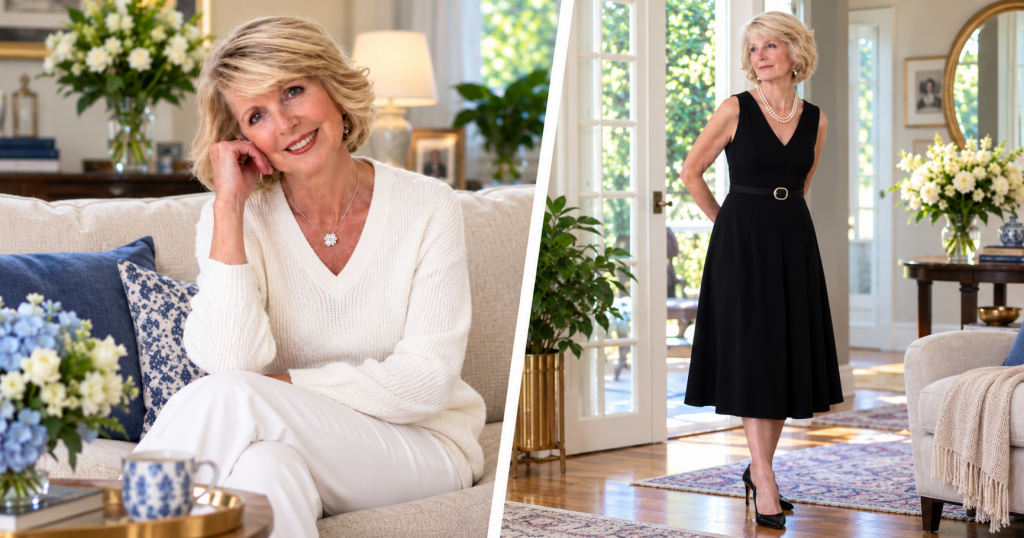
Behind that simple statement lies a much larger question. At what point, if ever, should age determine how a person is allowed to present themselves?
The Unwritten Rules of Aging
Society has plenty of formal rules, but it also operates according to unwritten expectations. Clothing is one of the areas where these expectations become especially visible.
Younger people are often encouraged to experiment. They can change hairstyles, follow unusual fashion trends, wear bold colors and reinvent their appearance. Such choices may be described as creative, adventurous or expressive.
As people grow older, however, the language around personal appearance often changes. Instead of being encouraged to experiment, they may hear that they should dress “elegantly,” “sensibly” or “for their age.”
Those words may sound harmless, but their meaning can be surprisingly restrictive.
What exactly does dressing for a particular age mean? There is no universal answer. Standards differ between countries, generations, families, workplaces and social groups. An outfit considered perfectly ordinary in one community might be regarded as daring in another.
That makes the idea of “age-appropriate” clothing far less objective than it initially appears.
Clothing Is More Than Fabric
People rarely choose clothes solely because they need protection from the weather. Clothing also communicates personality, mood, cultural background and individual taste.
Someone who has loved colorful dresses for 40 years does not necessarily stop loving them after turning 70. A person who has always enjoyed jewelry, fashionable shoes or distinctive hairstyles may continue enjoying those things throughout later life.
A birthday does not automatically replace someone’s personality.
This is why criticism directed at older people’s clothing can feel particularly personal. The message may not simply be, “I dislike that outfit.” It can sound more like, “Someone your age should no longer present themselves this way.”
There is an important difference between those statements.
Fashion preferences are subjective. People are free to dislike an outfit. But disliking someone’s clothes does not automatically give an observer the authority to determine what that person should wear.
Women Often Face Particular Pressure
Although people of every gender can experience age-related expectations, women frequently encounter especially intense scrutiny over appearance.
Women can receive contradictory messages throughout their lives. They may be encouraged to look attractive but criticized for appearing to seek attention. They may be told to embrace aging naturally while simultaneously being surrounded by advertising promising younger-looking skin, hair and bodies.
Then, when an older woman chooses clothing associated with confidence, glamour or sensuality, another contradiction can appear: she may be told that such styles belong to younger women.
The result is an impossible standard.
Age gracefully—but do not look old. Stay fashionable—but do not appear to be trying too hard. Be confident—but not so confident that your appearance challenges conventional expectations.
No wardrobe can satisfy every observer under those conditions.
Where Does “Appropriate” Come From?
There are situations where clothing expectations serve practical purposes. A workplace may require protective equipment. A formal ceremony may have a dress code. Certain religious or cultural settings may have established customs. Weather and physical comfort also influence what people choose.
Those are understandable considerations.
But criticism based exclusively on someone’s birth year is different.
If an outfit is acceptable on a 35-year-old person, why must the same clothing automatically become unacceptable at 75? The fabric has not changed. The design has not changed. What changed is the number associated with the wearer.
That reveals something important: many judgments about older people’s clothing are not really about clothing at all. They are about assumptions concerning how older people are expected to behave.
Older adults are sometimes imagined as people who should gradually become quieter and less visible. Bold fashion challenges that stereotype because it announces presence rather than disappearance.
Confidence Does Not Expire
There is another reason personal style can matter later in life.
Aging involves changes that nobody can completely avoid. Bodies change, routines change and social roles may change. Retirement, children leaving home, bereavement or other major transitions can reshape everyday life.
Personal style can remain one area in which an individual continues exercising direct choice.
Choosing an outfit can be a small act, but small acts of independence matter. Deciding what to wear, how to arrange one’s hair or whether to follow fashion trends can reinforce a sense of personal identity.
This does not mean every older person should dress boldly. Quite the opposite.
Freedom of choice includes the freedom to prefer simple, conservative or traditional clothing. A 75-year-old woman who loves modest dresses deserves exactly the same respect as one who prefers striking outfits.
The important principle is that neither should be forced into the other’s wardrobe.
Social Media Has Made Judgment Louder
Public criticism of appearance is not new, but modern online platforms have dramatically increased its reach.
A photograph that once might have been seen by a handful of acquaintances can now reach thousands or millions of strangers. Those strangers can immediately comment on someone’s body, hairstyle, clothing and perceived age.
Online discussion also encourages quick judgments. A viewer sees an image for a few seconds and forms an opinion without knowing anything about the person pictured—their personality, circumstances or reasons for choosing that outfit.
Age can then become an easy target.
Comments presented as advice may actually reflect the commenter’s personal expectations. Saying that someone “should” dress differently is not necessarily concern; sometimes it is simply an attempt to enforce a social convention.
That distinction matters.
Taste and Personal Freedom Can Coexist
Supporting someone’s right to choose their clothing does not require everyone to admire their fashion.
One person may consider an outfit beautiful. Another may think it unattractive. Both reactions are legitimate expressions of taste.
The problem begins when preference is transformed into authority.
“I wouldn’t wear that” is fundamentally different from “You shouldn’t wear that.”
The first describes an individual’s taste. The second attempts to establish a rule for another person.
This distinction applies far beyond fashion. Healthy social tolerance does not require universal agreement. It requires recognizing that adults can make harmless personal choices without needing approval from strangers.
Aging Is Becoming More Diverse
Traditional images of later life are also becoming less useful because there is no single way to experience old age.
Two people of the same age can have completely different lifestyles, interests and personalities. One 75-year-old may prefer quiet days at home. Another may travel frequently, attend concerts, work, dance, exercise, study or participate actively in community life.
Their wardrobes are likely to be different as well.
Chronological age provides some information about a person, but it does not describe an entire identity.
As populations live longer and older adults remain socially active for more years, rigid expectations surrounding age increasingly fail to reflect reality. The idea that everyone should gradually adopt the same appearance simply because they have crossed a particular birthday makes little sense in a society that otherwise celebrates individuality.
The Real Meaning of Her Answer
The statement “I have the right to choose how I want to dress” is powerful precisely because it does not demand that everyone approve.
It asks for something simpler: autonomy.
She is not saying other people must copy her style. She is not claiming that every outfit will appeal to everyone. She is asserting that the final decision about her own appearance belongs to her.
That principle is difficult to argue against when the choice harms no one else.
Perhaps the more useful question, then, is not whether a particular outfit is appropriate for a 75-year-old woman. It is why society remains so interested in assigning wardrobes to people according to age.
Growing older inevitably changes many things. Personal freedom does not have to be one of them.
A person who has spent decades developing their own tastes should not suddenly need permission to express them. Whether someone chooses bright dresses, jeans, elegant suits, comfortable sweaters or something unconventional, style can remain exactly what it has always been: a personal decision.
There is no birthday on which individuality must be returned, confidence surrendered or a favorite wardrobe retired.
At 75, she has heard the criticism and made her choice. Others can debate the clothes if they wish. But the person living her life—and wearing them—is still her.